Sergej Vutuc, "Cruysberghs"


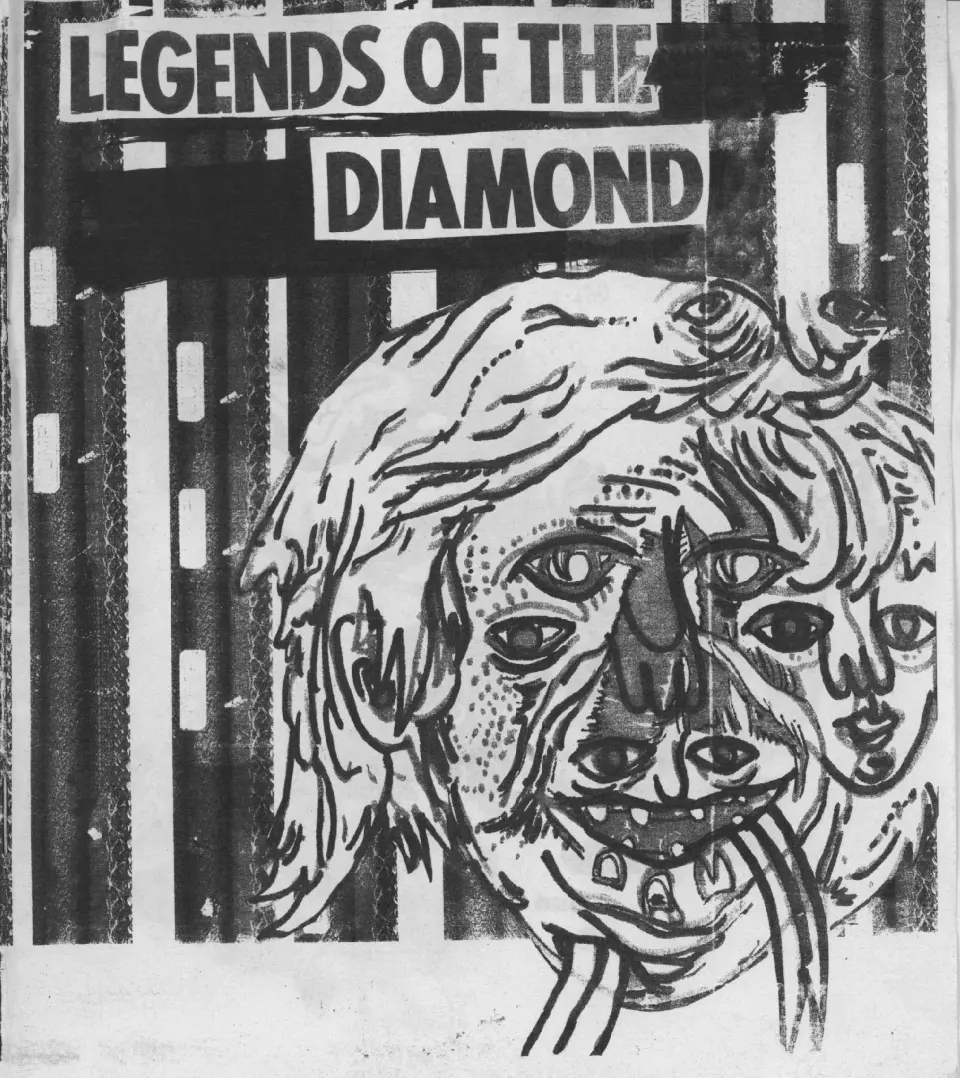
I discovered Sergej Vutuc right around when I first started shooting film in 2015. I can't remember how I discovered his work- it might've been on some online feature, I doubt the Instagram algorithm at the time served it up to me. Regardless, at the time, it hit me like a lightning bolt. I had just started doing home development under truly disgusting, 260 year old haunted mansion conditions. Struggling to load my film onto stainless steel reels in a changing bag and pulling warped film strips out of my developing tank, stained with hideous white blobs where the film had folded in on itself. Hanging my film up to dry in a miasma of dust, sneaking into the Amherst College media labs off the clock to use their scanners. I hadn't yet learned about photoflo, or compressed air, or the clone stamp tool. I didn't really understand DPI and so was scanning my work at the highest level possible, giving me giga 600mb files of uber-dusty frames. Sergej's work was the first time I was exposed to a dirty style of photography, and particularly film photography: gritty, dionysian, and totally engaged with the physicality of film. This approach to making photographs felt at the time like a silver bullet, a hidden escape route from the pursuit of perfect negatives, total clarity. It led me down a wormhole of other artists- Miroslav Tichy, Daisuke Yokota, William Klein, the list goes on!! His work inspired me to go out and buy an enlarger and learn how to make darkroom prints, it's not hyperbolic to say these little publications changed my life.
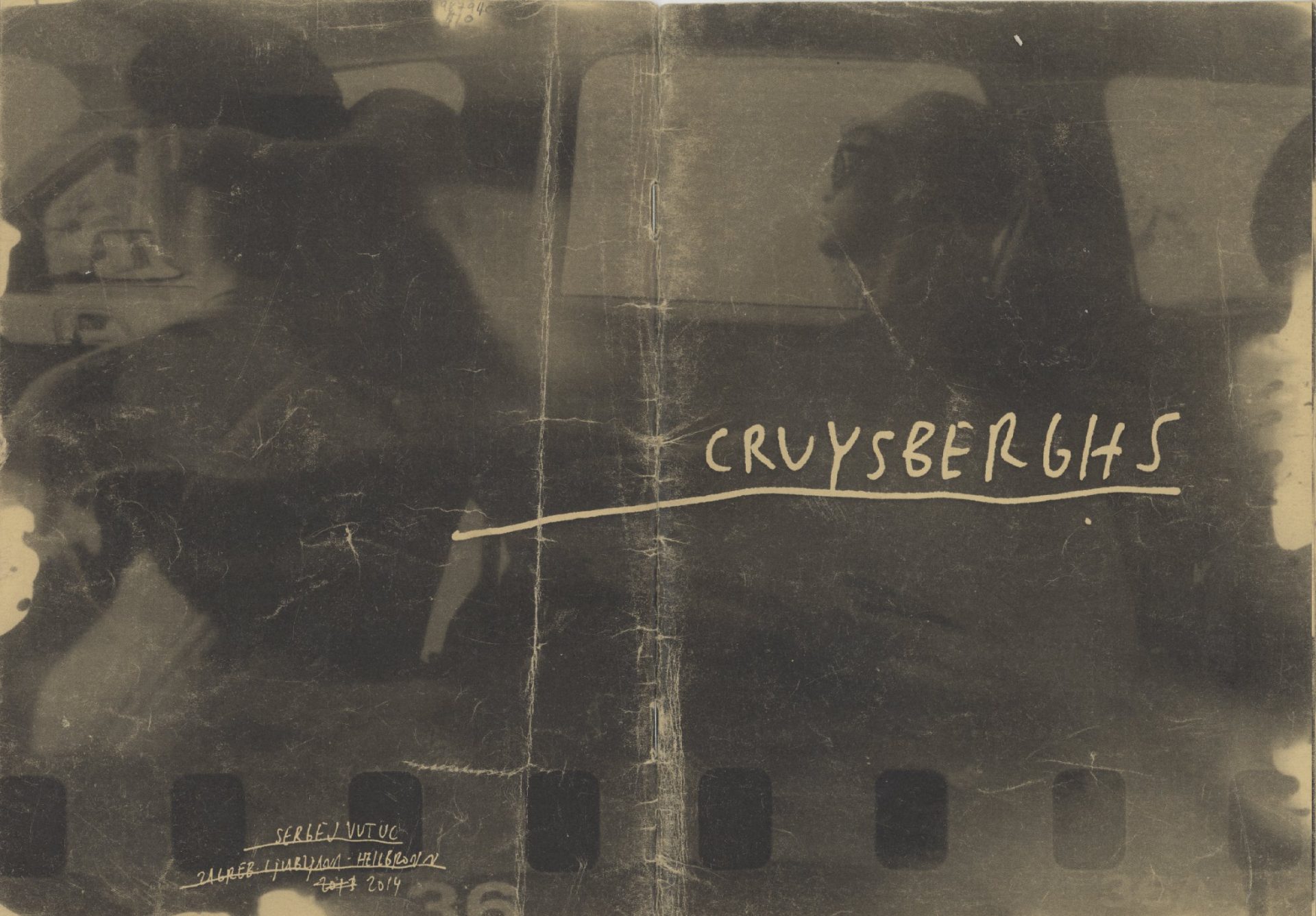
Sergej Vutuc's zines are, ostensibly, feature skate zines, this svelte volume being focused on the Belgian street skater Axel Cruysberghs. Over eleven spreads we get documentation of a street session, parked cars, pedestrians at crosswalks, grinding an incredible staircase at some building with a karate sign. All captured in a smeared, hazy collage of sprocket holes, splattered on developer, diffused scenes, negatives overlaid and cut up in montage all done up under red light in the darkroom. If I buy a photozine and just one image from the grouping sticks with me, continues to resonate after the five minutes it takes to flip through a copy, I am happy. This spread below is that image- it's stuck with me in a way many other images from more finely printed works of his haven't

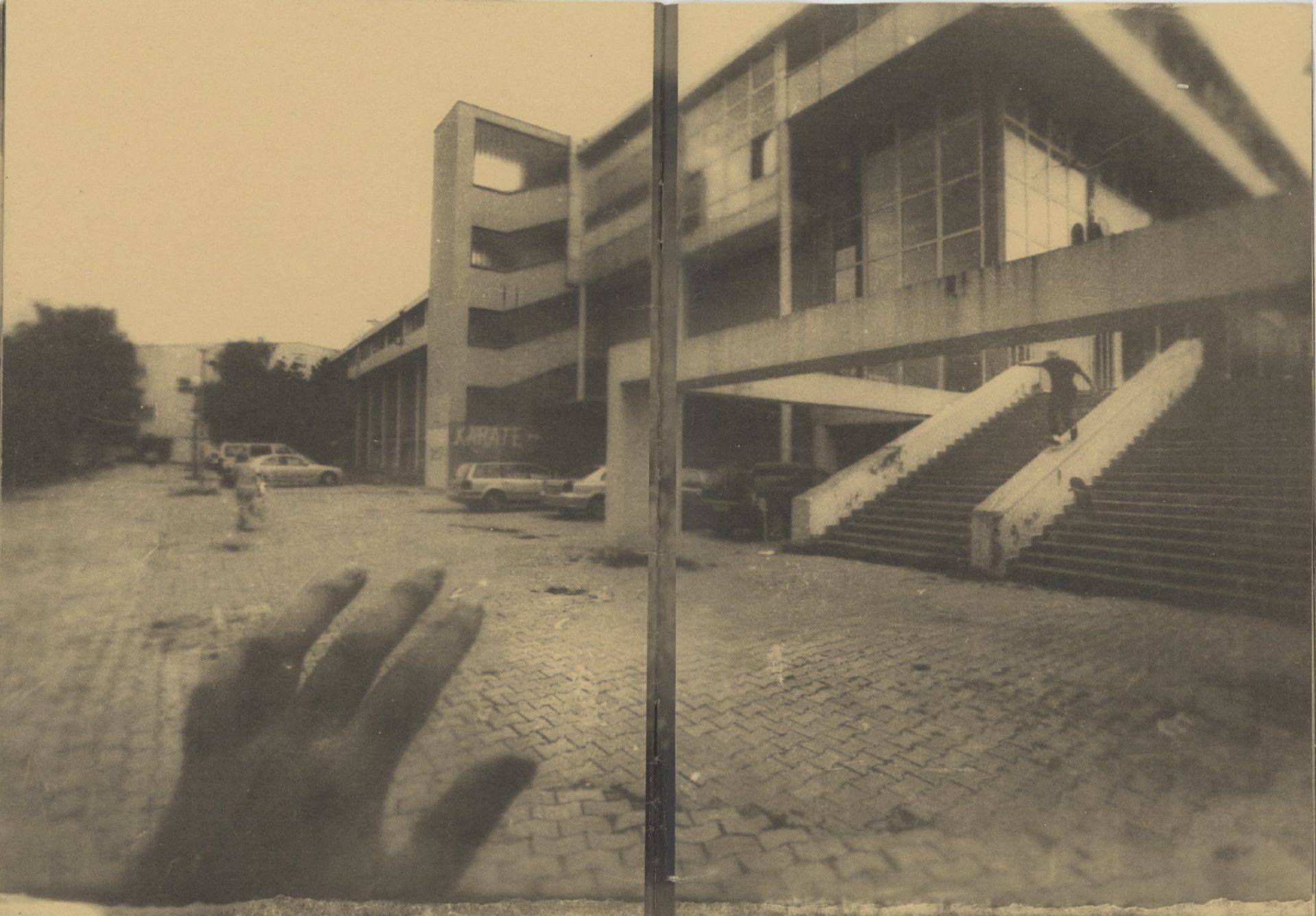
The gesture of a hand reaching out past the camera and into the frame is really cool, it's to me a very thought provoking gesture and a signature visual across his other zines and prints. I recognize this gesture also from Sigmar Polke, it makes me think of the Wolf Eyes claw. I've tried to ape it myself here and there when I find myself in some awe inspiring location without any object of foreground interest. I think of it as an assertion of the artists presence, invading space- the best corollary I can think of is Lee Friedlander's collection of images where his shadow falls in the frame.

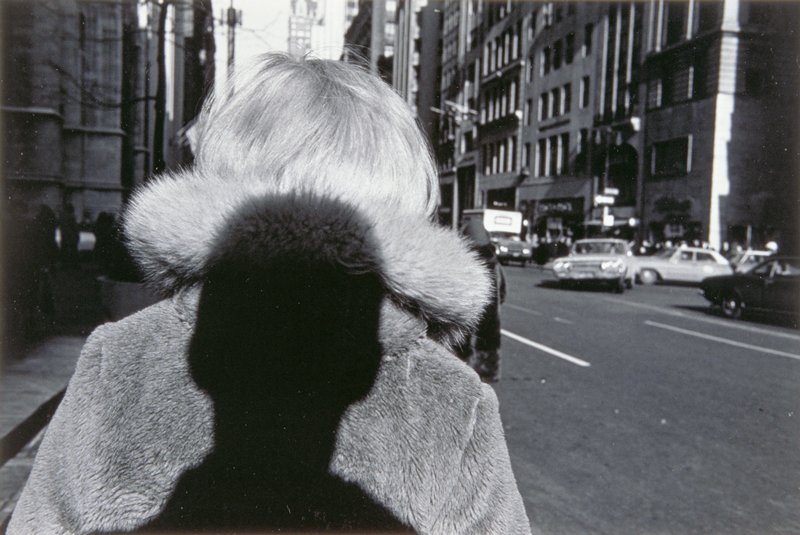
^ Lee Friedlander ^
I have a number of Sergej's publications, in various degrees of quality- from thick cardstock, to a lovely riso-printed volume bound in a sandpaper slipcase. This is the cheapest one, printed on thin sand colored paper, with a brutal gutter running down the middle of every photo. It just works though. Ten years later, I can appreciate the beauty of a perfect image. But when your goal is clarity, when you print you will always be a slave to the quality of your paper- in search of a media that'll give justice to high fidelity. Take the opposite tack and an entire world of printing media is yours to play with and enjoy. You can make something that can be folded, creased, torn, and not be ruined.
view~~ -> https://www.are.na/block/43967963