Learning from indigenous communities now and then.

Z network writes great articles. In one of their latest they write about "earthy governance"
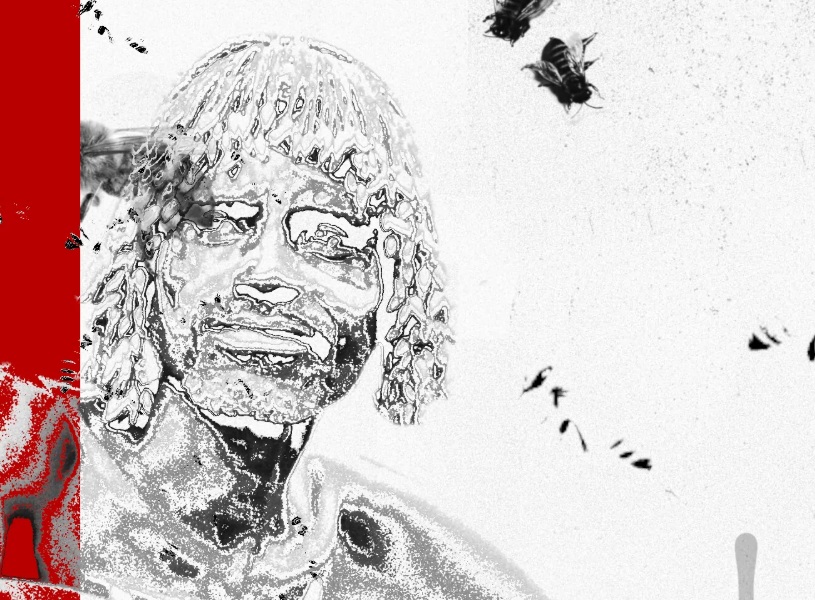
In making this statement, Tsewang Gyalson highlights the problems of modern day representative or liberal democracy. Such a model of governance relies heavily on elections and party politics, encourages hostility amongst sections of citizenry, favors those with lots of financial and other resources to put into campaigning (who then have to ‘recover’ what they spend through oft-dubious means), and usually ends up centering power in the hands of a few people.
As people like Murray Bookchin and Abdullah Öcalan have highlighted, the nation-state model sustains itself on the logic that nature – and colonized peoples – are things to be conquered, assimilated, dominated, and exploited. This logic was further supported through the capitalist and extractive modernity by asserting that the only way to organize lives is that of a centralized government that could help reach ‘welfare’ to the ‘masses.’ This has been used as a justification for taking over territories of Indigenous peoples and local communities for nationalist goals like ‘development’ and security.
Certainly, this does not mean that the welfare state should just be dismantled; It should be protected from the heinous attacks it is undergoing. But it should be protected with the simultaneous action of building better institutions to replace it.
This would not be the first time we in the "west" have learnt from indigenous communities about how to govern ourselves. In the Dawn of Everything by Graeber and Wengrow, they document quite rigorously how significant elements of Western Democracy were based directly and indirectly on native american forms of governance.
We need to again go back to these evergreen roots of human liberation, practice some much needed humility, and admit that we have more to learn from our indigenous peoples; that we can all learn from each other.
The authors further write that
At the core of earthy governance is an intrinsic wisdom, an ethical understanding that since human communities are part of nature, the more-than-human communities who are part of the web of life have to be integral to governance.
It reminds me of a much older book called the "one straw revolution", which in its opening pages, argues that
[What is to be feared about] modern applied science is its disdain for mystery, its willingness to reduce life to what is known about it and to act on the assumption that what it does not know can safely be ignored.
What both of these statements say to me is that some acknowledgement of our own flaws and cognitive limits must be at the core of any dignified future governance. This can come in the form of an axiomatic reverence for other forms of life presented in the first quote and often found in many indigenous cultures. It can also come in other smaller steps more in line with the second quote; small iterative acknowledgements that our complex biospheres on earth are simply beyond our comprehension in many ways, and simply observing and letting them do what they do can benefit humans in many material ways.
I'm certainly not anti-science. Most of my adult life has been spent in pursuit of scientific study at multiple universities. But I am extremely suspicious of this "modern applied science" largely born out of the death and destruction of WW2, and so inherently twisted by the incentives and motivations born of such a horrific industrial death machine. And I think the quote from "One Straw Revolution" captures much of what embodies that suspicion: it lacks a much needed reverence for the unknown and the unclassifiable; it lacks a human reference point.
Anyway, this is really just a short article intended to encourage you to read the two quoted sources.